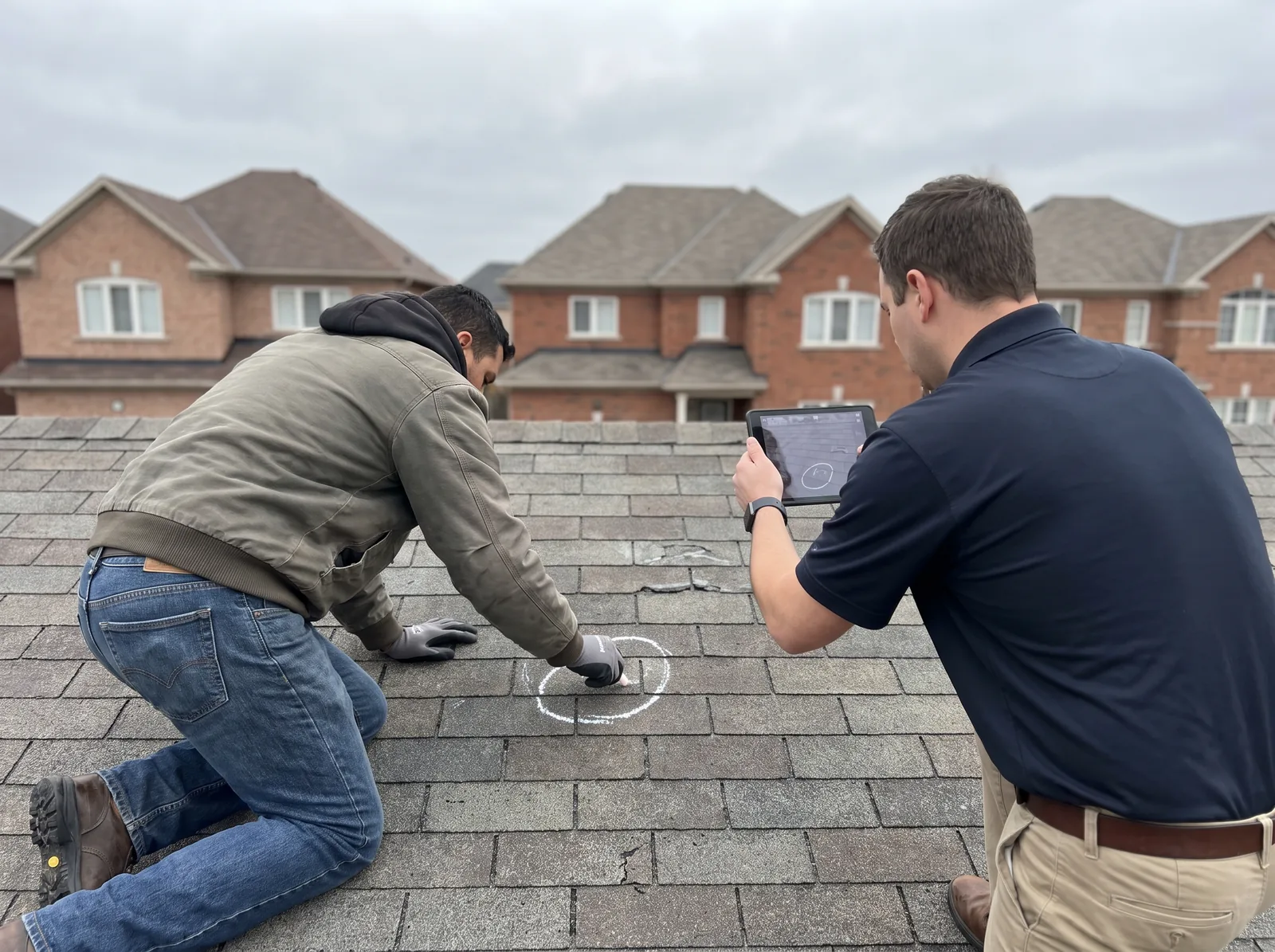
Green Country storms don't keep office hours. The derecho came through after 11 PM on a Saturday in June 2023; the May 2024 hail fell at dinnertime; the March 2026 storms rolled through late on a Friday. When the ceiling starts dripping, the first job is to stop the water — not to write an estimate. So the phone is answered 24 hours a day by a person who can dispatch a crew, and the first visit is about tarps, cap nails and a dry attic.
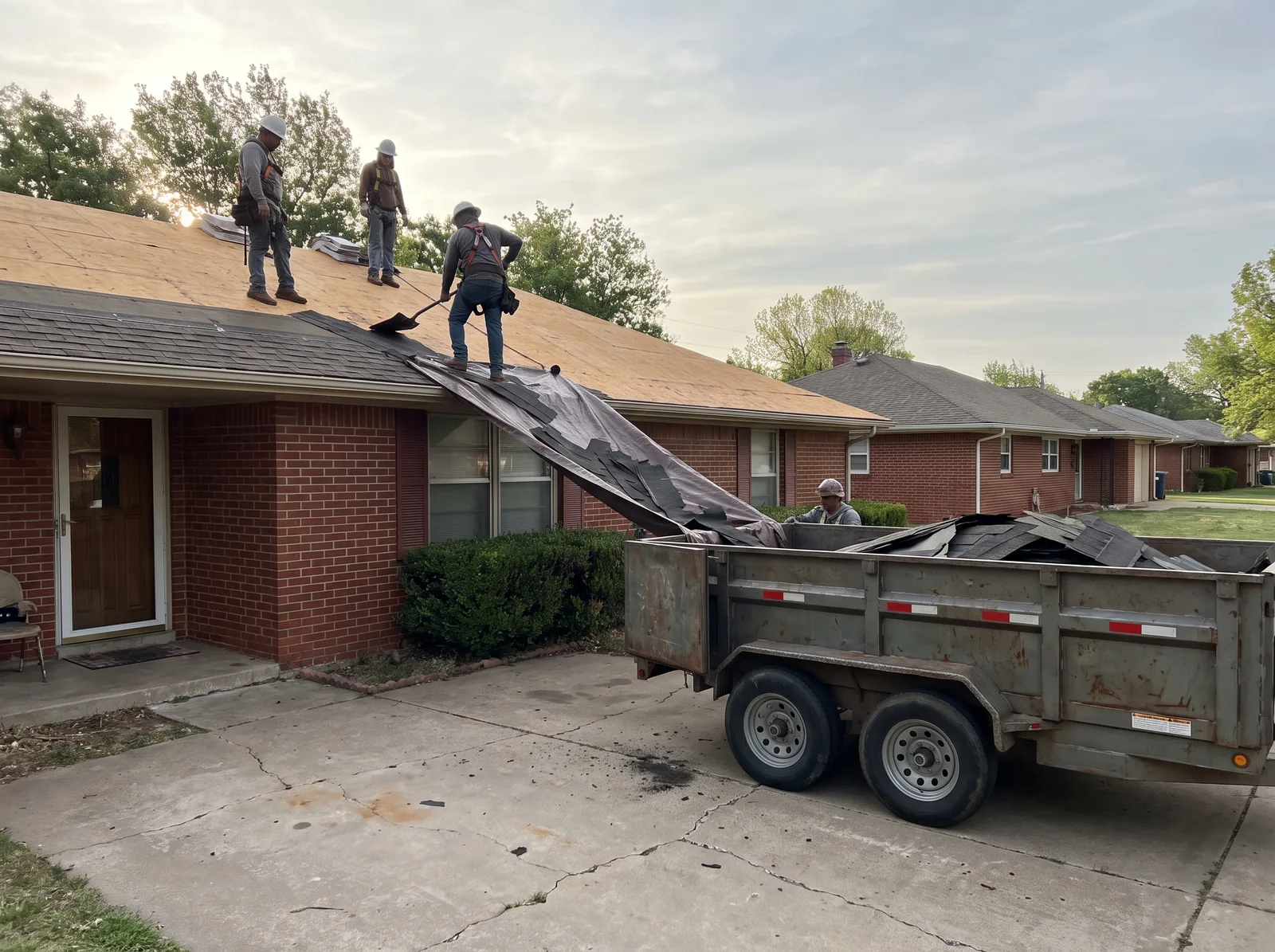
A proper emergency dry-in is a heavy woven tarp run from the ridge over the damaged area and past it, fastened through wood strips with cap nails so the wind can't get under it, with the edges lapped the way water runs. Done right it holds through the next storm and buys the weeks it can take for an adjuster to come out. Done wrong — a blue hardware-store tarp with bricks on it — it's gone by morning. If a limb is through the deck we cut it back, patch the decking and dry it in the same visit; if the whole roof is open we can usually get you dried in the same day and replaced within the week.
What it costs: the tarp visit is $300 to $950 depending on the size and the hour, and every dollar of it is credited toward the repair or replacement when we do the work. Take photos of the damage and the water before we cover it — your carrier will want them — and don't sign anything from anyone who shows up uninvited after the storm. Emergency work does not require a contingency contract or an assignment of your claim, and we never ask for one.
What's included
- 24-hour answerA real person on the phone at any hour, with a crew dispatched for active leaks and open roofs.
- Tarp & dry-inHeavy woven tarps over the ridge, fastened through wood strips with cap nails, edges lapped with the water.
- Limb & puncture responseLimb cut back, decking patched, underlayment and shingles or a tarp, all in one visit.
- Interior protectionAttic insulation checked, wet sections pulled, drip points routed so the drywall doesn't come down.
- Photos for your claimDamage and water documented before it's covered, with the date and time stamped.
- Credited to the repairThe full tarp charge comes off the repair or replacement invoice when we do the work.
Emergency roof repair cost in Broken Arrow, OK
| Job | Typical price | Notes |
|---|---|---|
| Emergency tarp / dry-in, one area | $300 – $600 | Credited to the repair |
| Large dry-in — whole slope or multiple areas | $600 – $950 | Credited to the repair |
| Limb removal from the roof + patch + dry-in | $450 – $1,700 | Tree crew referred if a whole tree is down |
| Same-visit permanent repair (small) | $350 – $1,000 | When daylight and weather allow |
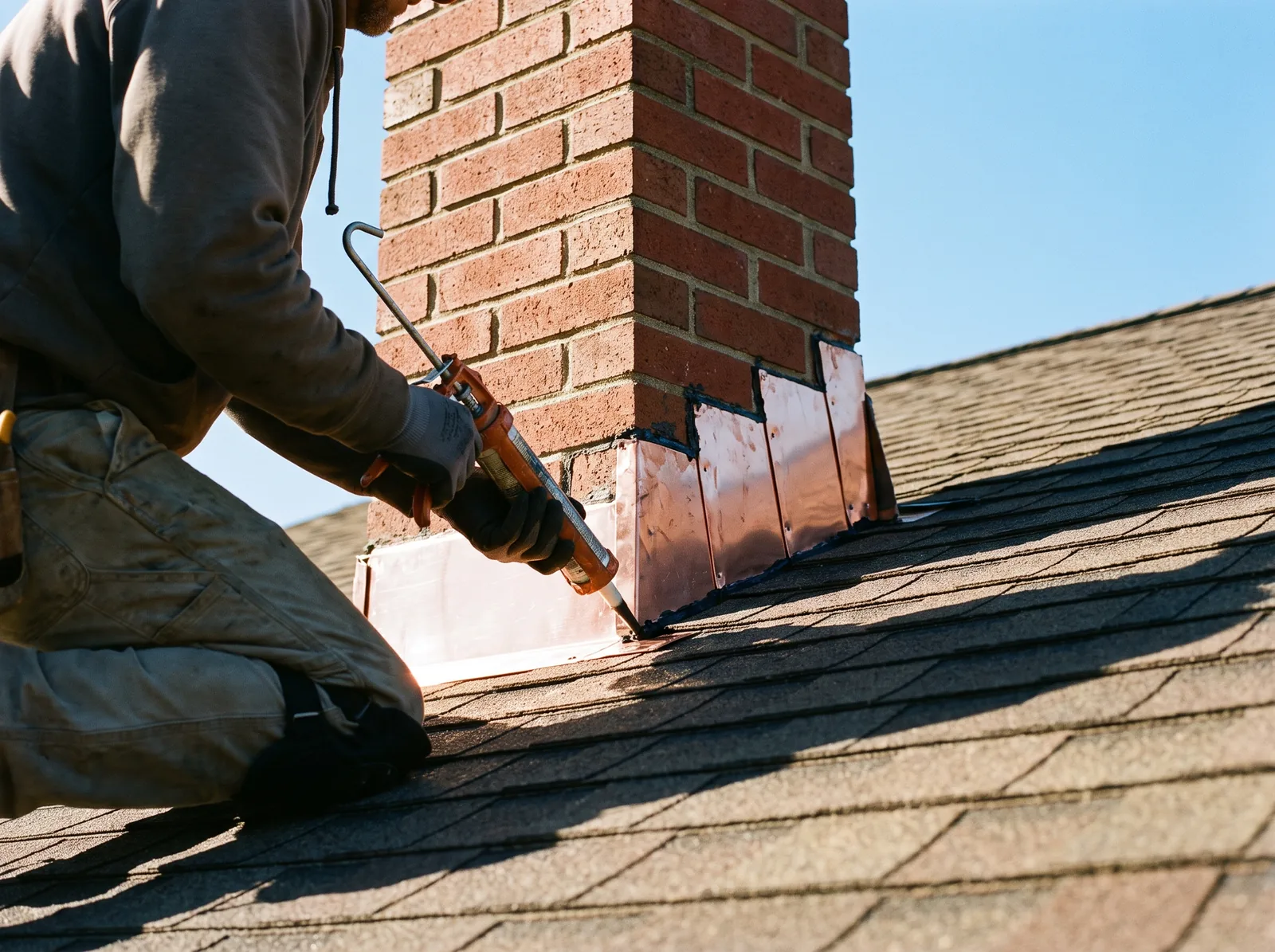
| Ridge cap replacement after wind | $300 – $800 | Common after derecho-type events |
| Insurance claim documentation | Included | Photos, report, adjuster meeting |
After-hours calls carry no surcharge for the phone call; a night or holiday dispatch may run toward the top of the range. Every tarp charge is credited in full toward the repair or replacement when we do the work.
Recent work
Questions we get about emergency roof repair
What should I do first when the roof is leaking?
Get a bucket under it, move what's under the wet ceiling, and if the drywall is sagging, poke a small hole to let the water out before it comes down all at once. Then call. Don't go on the roof in a storm — that's what we're for.
How fast can you get here?
For an active leak or open roof, usually within a few hours, any hour of the day; after a big storm that hits the whole metro, we work the open roofs first and the drips second. We'll give you an honest time on the phone.
Will a tarp hold?
Ours will, through the next storm and for weeks after. The difference is the wood strips and cap nails — a tarp held down with bricks or a few staples is gone in the next gust.
Will my insurance pay for the tarp?
Almost always. Emergency measures to prevent further damage are a covered expense on standard Oklahoma homeowner policies, and we invoice the tarp separately so it's easy to submit.
Someone knocked on my door offering to tarp it for free. Should I let them?
Ask for their CIB registration number and read what they want you to sign. A 'free tarp' tied to a contingency agreement or an assignment of your claim is how storm chasers lock up a roof. Read how to spot a storm chaser.
The power's out and the roof is open. Can you still come?
Yes. Tarps go on without power. If a tree's down on the line, we wait for PSO to clear it before anyone goes near the roof.